

What to Say When Your Child Is Anxious About School: Supportive Statements for School Avoidance
“My stomach hurts.”
“I can't go to school.”
“I’m not getting on the bus.”
“Please let me stay home.”
If you've heard these words on repeat, you know how difficult school mornings can be when anxiety enters the picture.
And when your child is crying, panicking, or refusing to leave the house, it can be incredibly hard to know what to say.
Your instinct may be to reassure them.
“You'll be okay.”
“I promise nothing bad will happen.”
“You don't have anything to worry about.”
Or maybe you find yourself negotiating.
“What if I drive you instead?”
“How about you just go for the first hour?”
“I'll call the school and see if you can take a break.”
These responses come from a good place. You want your child to feel better. You want to reduce their distress. And when they're struggling, it's natural to want to make the problem go away.
But there's another way to respond that can help your child build confidence in their ability to handle anxiety.
Your Child Doesn't Have to Feel Calm to Go to School
One of the most important shifts parents can make is moving away from the idea that your child needs to feel better before they can move forward.
Anxiety often sends the message:
“I can't do this because I'm scared.”
When we repeatedly try to convince a child that there is nothing to be afraid of, we may unintentionally reinforce the idea that they need to feel certain or calm before they can take the next step.
Instead, we want children to gradually learn:
“I can feel anxious and still do hard things.”
That's a very different message.
And it starts with how we respond when anxiety shows up.
What Should You Say Instead?
A helpful starting point is to communicate two things at the same time:
I understand this is hard.
I believe you can handle it.
This doesn't mean dismissing your child's anxiety or pretending that school isn't difficult for them.
It means acknowledging their experience without communicating that anxiety needs to be eliminated before they can move forward.
For example, there's a difference between saying:
“Don't worry. You're going to be fine.”
and communicating:
“I know this feels really hard, and I believe you can handle it.”
The second response doesn't promise that everything will go perfectly.
It communicates something even more important: confidence in your child's ability to cope.
But What About the Stomachaches?
This is where things can get especially complicated.
Anxiety doesn't just happen in your child's thoughts. It can show up physically, too.
Stomachaches. Headaches. Nausea. Shaking. Racing heart. Feeling like they might throw up.
So when your child says, “My stomach hurts. I can't go to school,” it can be tempting to either dismiss the symptom or immediately find a way to make it better.
Neither response is particularly helpful.
Your child doesn't need you to determine whether the sensation is “real.”
Instead, you can acknowledge that they're uncomfortable while still communicating confidence that they can handle what they're experiencing.
But what does that actually sound like?
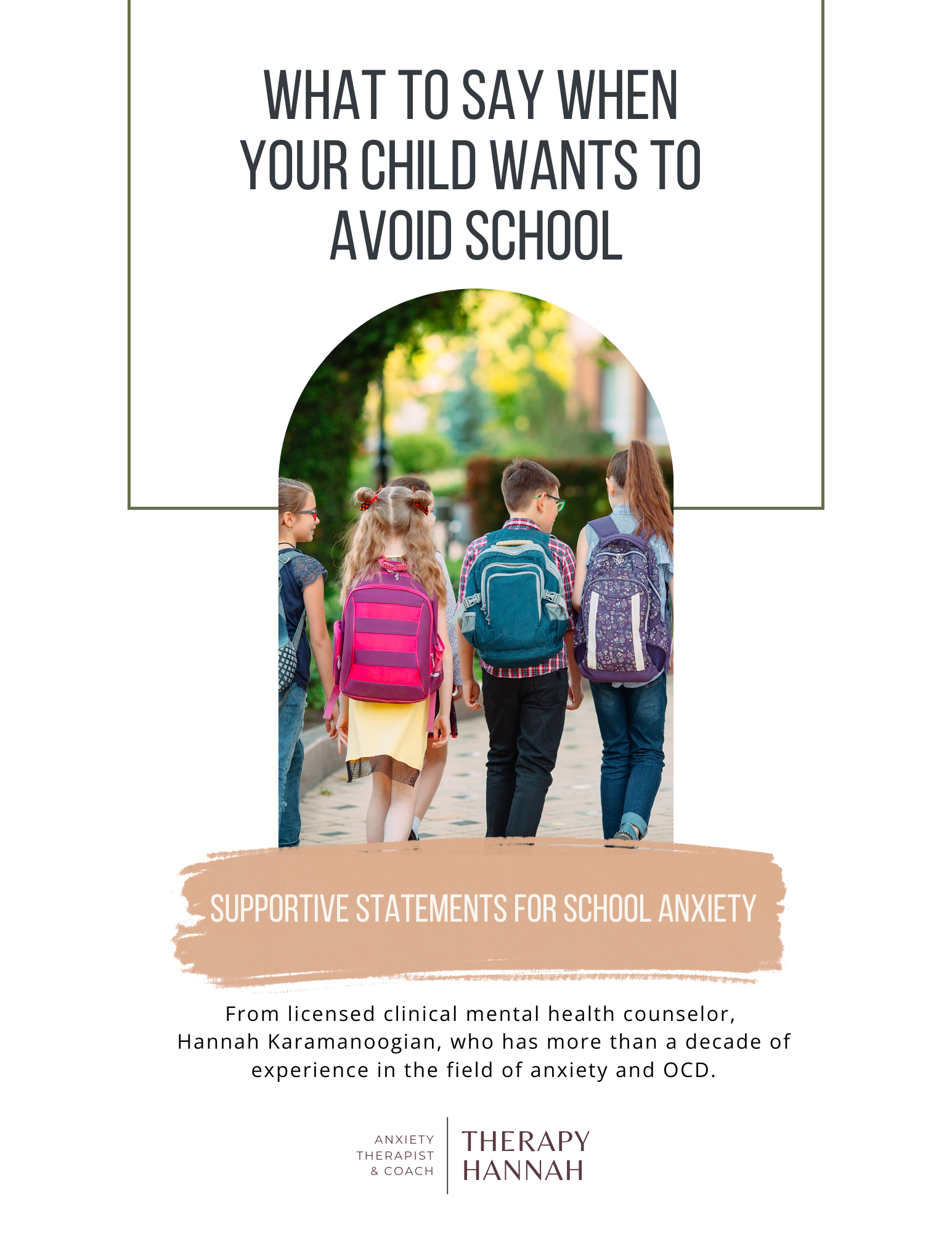
I've put together a free worksheet with specific examples you can use for some of the most common school-anxiety situations.
What If Your Child Refuses the Bus?
The bus can become a major source of anxiety for some children.
Maybe it's the separation from you. Maybe they're worried about sitting alone. Maybe they're afraid they'll feel sick, have a panic attack, or not know what to do if something goes wrong.
And when your child is standing at the door refusing to get on, it's easy to get pulled into a lengthy conversation about why they can't do it.
You don't necessarily need to convince them that the bus is safe.
You don't need to guarantee that they'll have a good day.
And you don't need to find the perfect words that will suddenly make them feel confident.
Sometimes, a short, supportive response is much more helpful.
Want examples of exactly what that can sound like?
The free Supportive Statements for School Anxiety worksheet includes practical scripts for moments like this, so you don't have to come up with something in the middle of a stressful school morning.
When You're Not Sure What to Say
Parents often tell me that they understand the general idea of supporting their child's anxiety, but when they're actually standing in the kitchen at 7:30 a.m. with a child who is refusing to leave, they aren't sure what to say.
That's completely understandable.
Knowing “I should validate this” is one thing.
Knowing what to say when your child says “I'm not going!” is another.
That's why I created this free resource.
It's designed to be something you can actually keep nearby and refer to in the moment, rather than another parenting resource you'll read once and forget about.
Inside the free worksheet:
You'll find examples for common situations such as:
“My stomach hurts.”
“I can't get on the bus.”
“I don't want to go into school.”
“I need to stay home.”
“I'm not ready.”
“What if something happens?”
For each situation, you'll see examples of responses that can unintentionally feed anxiety, along with more supportive language that communicates both understanding and confidence.
Download the Free Worksheet
If school mornings have become a battle with anxiety, having a few supportive statements ready can make it easier to respond consistently when your child is struggling.
[DOWNLOAD THE FREE SUPPORTIVE STATEMENTS WORKSHEET]
You don't have to find the perfect words.
You just want your child to hear the message:
“I know this is hard. And I believe you can handle it.”
This resource is for educational purposes and is not a substitute for individualized mental health treatment.
