

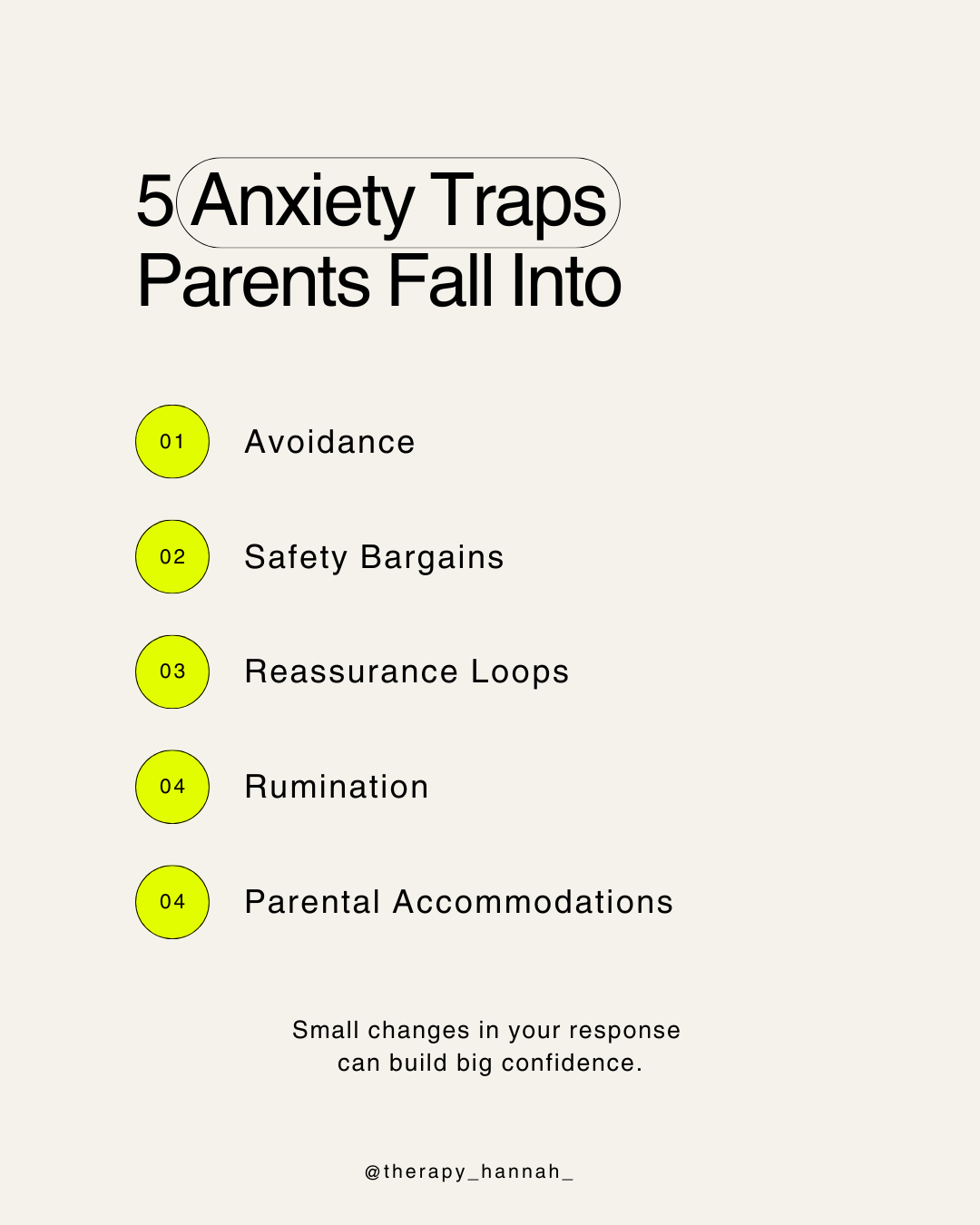
5 Anxiety Traps Parents Fall Into (That Can Make Child Anxiety Worse)
If you're parenting an anxious child, you’ve probably asked yourself:
Am I helping my child the right way?
Why does their anxiety keep coming back?
What should I say or do in the moment?
Here’s something most parents don’t realize: some of the most natural and loving responses to anxiety can accidentally make it stronger.
When a child feels anxious, parents instinctively try to remove the distress. But anxiety doesn’t shrink when we eliminate discomfort — it actually grows when children don’t get the chance to face and tolerate it.
Below are five common anxiety traps parents fall into and what to do instead to help your child build real confidence and resilience.
1. Avoidance: Letting Your Child Skip Scary Situations
Avoidance is one of the most powerful forces that keeps anxiety going.
When something feels scary — speaking in class, sleeping alone, going to a birthday party, or trying something new — anxious kids often want to avoid the situation entirely.
Parents may allow this because they see how distressed their child feels.
Common examples include:
Letting a child skip school presentations
Speaking for them in social situations
Allowing them to avoid activities that cause anxiety
Letting them stay home from events that feel overwhelming
Avoidance works in the short term because it makes the anxiety disappear quickly.
But the brain learns an important lesson:
“That situation must actually be dangerous.”
Over time, avoidance causes anxiety to spread to more and more situations.
What helps instead
Confidence grows when kids face challenges gradually.
Instead of removing the situation, help your child take small, manageable steps toward it. Each experience teaches their brain:
“I can handle this.”
2. Safety Bargains: “You Only Have to Stay for a Few Minutes”
Parents often create agreements to help their child tolerate something scary.
These sound like:
“You only have to stay for 10 minutes.”
“I’ll sit right outside the classroom.”
“You can text me the whole time.”
“We can leave if you feel anxious.”
These are called safety behaviors, and while they may help a child enter the situation, they can reinforce the idea that the environment is unsafe without special protection.
The child learns:
“I can only handle this if my safety plan is in place.”
What helps instead
Gradually reduce safety conditions over time while emphasizing your child’s ability to cope.
Support your child with messages like:
"It might feel uncomfortable at first, but I know you can handle it."
3. Reassurance Loops: Answering the Same Worry Questions
Many anxious children repeatedly ask questions like:
“Are you sure I won’t get sick?”
“Are you sure nothing bad will happen?”
“Are you sure I did this right?”
“Are you sure you'll pick me up?”
Parents naturally answer these questions because they want to calm their child.
But reassurance only reduces anxiety temporarily. Soon the worry returns, and the child asks again.
Over time this becomes a reassurance loop, where anxiety depends on constant confirmation from others.
What helps instead
Rather than repeatedly answering the question, gently redirect your child toward tolerating uncertainty.
You might say:
"That sounds like your worry asking for reassurance again. What do you think?"
This helps children learn that they can manage anxiety without needing constant answers.
4. Rumination: Talking About the Worry Over and Over
Rumination happens when children — and sometimes parents — spend long periods analyzing a worry.
This might look like:
Replaying social situations repeatedly
Discussing every possible outcome of a situation
Trying to fully solve or eliminate the fear
While these conversations can feel helpful, they often keep the brain focused on the problem.
Rumination tells the mind:
“This worry is really important and deserves constant attention.”
What helps instead
Acknowledge your child’s fear briefly, then redirect attention toward action or the present moment.
Try responses like:
"I know this is bothering you. Let's focus on what you need to do next."
5. Parental Accommodations: Changing Family Life Around Anxiety
Parental accommodation happens when family routines shift to prevent anxiety from being triggered.
Examples include:
Parents ordering food for a child who won’t speak to waitstaff
Avoiding places that cause anxiety
Siblings adjusting their routines
Parents constantly checking on the child’s safety
Accommodation reduces distress in the short term but can slowly allow anxiety to take control of family life.
What helps instead
Gradually reduce accommodations while increasing support for brave behavior.
Children learn an important lesson:
“Anxiety can show up, but it doesn’t get to run the family.”
The Real Goal: Teaching Kids They Can Handle Anxiety
Many parents believe the goal is to eliminate anxiety completely.
But anxiety is a normal emotion — everyone experiences it.
What truly helps children long term is learning:
I can tolerate uncomfortable feelings
I can face challenges even when I'm nervous
I am capable of doing hard things
Confidence develops when children experience themselves successfully handling fear.
Parenting an Anxious Child Isn’t Easy
If you recognize some of these patterns in your own parenting, you're not alone.
Almost every parent of an anxious child falls into these traps at some point. The important thing is learning how to respond in ways that build courage instead of reinforcing fear.
Small changes in how parents respond can dramatically improve how children learn to handle anxiety.
Want More Tools to Help Your Anxious Child?
If you're looking for practical strategies you can start using right away, my guide Breaking Free From Child Anxiety walks parents through simple evidence-based techniques to help kids build bravery, independence, and confidence.
You can learn more about it here.
